
Introduction
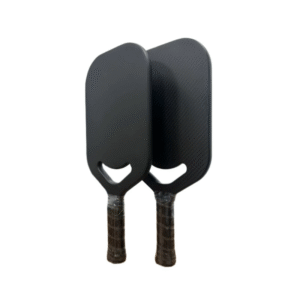
Carbon fiber pickleball paddles have become increasingly popular in the market due to their lightweight, high strength, and excellent elasticity. This material significantly enhances paddle performance, making it more competitive in matches while meeting athletes’ high standards for equipment. With the growth of fitness awareness and competitive sports, the demand for carbon fiber paddles continues to rise, drawing greater attention to related manufacturing technologies.
In the production process of carbon fiber pickleball paddles, hot press molding technology plays a critical role. It not only enables efficient forming but also optimizes the mechanical properties of materials, ensuring consistent product quality. By combining heat and pressure, the hot press machine allows materials to bond tightly and uniformly, achieving ideal strength and toughness.
The core advantage of hot press molding lies in its ability to complete forming in a short time while maintaining precise control over both appearance and internal structure. By adjusting temperature and pressure, resin flow and penetration are enhanced, resulting in dense composite materials. Additionally, this technology offers low cost and high efficiency, making it suitable for mass production and rapidly changing market demands.
Preparation and Material Selection
Before manufacturing carbon fiber pickleball paddles, proper preparation and material selection are essential. Carbon fiber fabric is one of the core materials, determining the paddle’s strength and lightweight characteristics. The selection should consider weave density and fiber orientation to ensure structural integrity and performance.
Resin is another key component that bonds the carbon fiber layers. Common options include epoxy resin and polyester resin, both of which must provide strong adhesion and reliable curing performance. The curing agent is equally important, as it affects curing speed and overall product quality, so compatibility with the chosen resin must be ensured.
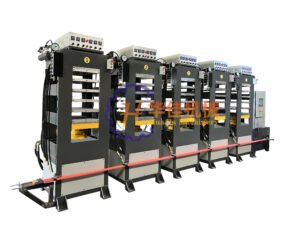
In addition to materials, equipment preparation is critical. The hot press molding machine is the core equipment used to apply high temperature and pressure, enabling resin infusion and bonding within the carbon fiber layers. Stable machine performance is essential for ensuring consistency and quality.
Mold preparation is also vital. The mold must be precisely designed according to the paddle structure to provide accurate shape and support during forming. A well-designed mold improves efficiency and reduces defects.
Mold Design and Manufacturing
Mold design and manufacturing are key steps in producing carbon fiber pickleball paddles. High-strength alloy steel is typically used to ensure durability and resistance to high temperatures and pressures.
The design process usually involves CAD software to create accurate 3D models and optimize structural strength, cooling channels, and material flow paths. These factors ensure even resin distribution and high-quality finished products.
Manufacturing involves multiple steps such as cutting, milling, drilling, and heat treatment, all requiring high-precision machinery. Dimensional accuracy is critical, as it directly affects molding performance. Repeated inspections ensure proper fit and alignment of all components.
Finally, mold assembly and testing ensure proper sealing and functionality, guaranteeing stable production and consistent product quality.
Carbon Fiber Layer Layup
The layup of carbon fiber layers is a crucial step in ensuring product quality and performance. The fabric must be carefully arranged in the mold according to design specifications.
Before layup, the mold must be thoroughly cleaned to prevent contamination. Carbon fiber sheets should be precisely cut to the required dimensions using proper tools.
Layers should be applied one at a time, ensuring smooth and even placement. Wrinkles and air bubbles must be avoided, as they can weaken the structure. After each layer, resin should be applied to ensure proper bonding.
Maintaining stable temperature and humidity conditions during layup is also important for achieving optimal material performance.
Resin Coating and Curing
Resin coating and curing are critical for optimizing material properties and ensuring structural integrity. Epoxy resin is widely used due to its excellent adhesion and heat resistance.
The resin must be evenly applied using brushing or dipping methods, depending on the required thickness and surface characteristics. Care must be taken to avoid air bubbles, which can compromise bonding quality.
Curing depends on temperature and time. Controlled environmental conditions promote proper cross-linking of resin molecules, improving performance. Additives can also accelerate curing.
Regular testing of hardness and adhesion ensures that curing meets quality standards.
Hot Press Molding Process
The hot press molding machine plays a vital role in shaping carbon fiber pickleball paddles. It uses controlled heat and pressure to form the material and enhance performance.
Key parameters include:
- Temperature: typically 150°C–200°C
- Pressure: usually 100–300 bar
- Time: optimized to avoid under-curing or overheating
Modern machines are equipped with sensors to monitor these parameters in real time, ensuring consistent production quality.
Cooling and Demolding
After molding, controlled cooling is essential to maintain shape and performance. Rapid cooling can cause internal stress or deformation, so gradual cooling is recommended.
Demolding must be done carefully using appropriate tools to avoid damage. Proper mold surface treatment reduces friction and ensures smooth removal.
Initial quality inspection after demolding checks shape integrity and surface finish.
Post-Processing and Inspection
Post-processing includes sanding, painting, and handle installation.
- Sanding: Removes surface imperfections and improves finish
- Painting: Adds protection and enhances appearance
- Handle installation: Ensures comfort and control
Final inspection evaluates elasticity, weight balance, and visual quality to ensure compliance with standards.
Conclusion and Future Prospects
The manufacturing process of carbon fiber pickleball paddles relies heavily on hot press molding technology. Each step—from mold design to curing—directly affects product quality and performance.
With growing demand for high-performance sports equipment, manufacturers must continuously improve processes and adopt advanced technologies. Future innovations may include smart materials and integrated sensor systems, further enhancing paddle performance.
In conclusion, carbon fiber paddle manufacturing not only involves precise processes but also represents significant potential for innovation and industry growth.